Will The Episcopal Church sacrifice its prophetic witness for full inclusion in order to protect its full standing in the Anglican Communion?
 Executive Council and House of Deputies member
Canon Mark Harris seriously considers the possibility that it will not.
Some are calling the decision before
The Episcopal Church (TEC) - between, on one hand, remaining in the
Anglican Communion under the moratorium prohibiting the blessing/marriages of same sex couples as well as prohibiting the election and consecration of non-celibate homosexuals or, on the other hand, embracing what has been described as the "prophetic witness of full inclusion" as an Episcopal-version of
Sophie's Choice. Pluralist writes on the possible decision to make this sacrifice
here. It has been
picking up steam in recent days by
Jim Naughton of the Diocese of Washington and with the leader of Integrity
here. The
Presiding Bishop has publicly
taken the view that such a decision would come from General Convention, but at the same time opens the door wide by qualifying her remarks,
saying:
"Individual bishops have always made their own decisions within the canonical responsibilities of their dioceses."

That's a very very interesting little phrase there. As we've heard over and over again from Episcopal bishops - the
Archbishop of Canterbury and the
Lambeth Conference have no canonical authority over The Episcopal Church bishops. So if individual bishops make their own decisions to choose full inclusion over inclusion in the Communion, there seems no evidence that
Katharine Jefferts Schori will do anything to stop them.
The orthodox - not only in The Episcopal Church - but also in the
Church of England should watch this very, very carefully. The orthodox in the Church of England tend to not primarily think politically, but theologically. Though certainly doctrine informs the canons and politics can inform doctrine, canons are inherently political and doctrine is naturally theological. The Episcopal Church has thrown its lot into canons of late - its primary authority now rests not in scripture, but in canonical law. It sees itself as an institution - an independent corporation - that has been a member of an international
league that it can opt-in and opt-out and ask questions later. For this international league to interfere in the polity of The Episcopal Church is akin to foreign intrusion - even if it happens to be the Archbishop of Canterbury.
If there is a prejudice - and there is a prejudice - against Americans in England for our innovations and our unilateral actions, there is also a prejudice in America against foreign invaders. It's at the core of who we are - it doesn't matter if we are liberal or conservative or rich or poor or young or old or from the East Coast or the West Coast or the Mid-West or the South - we don't like to be told by foreigners (including the British) what to do.
It may be a
"Sophie's Choice" to some - but what it appears we now have on an international scale is the
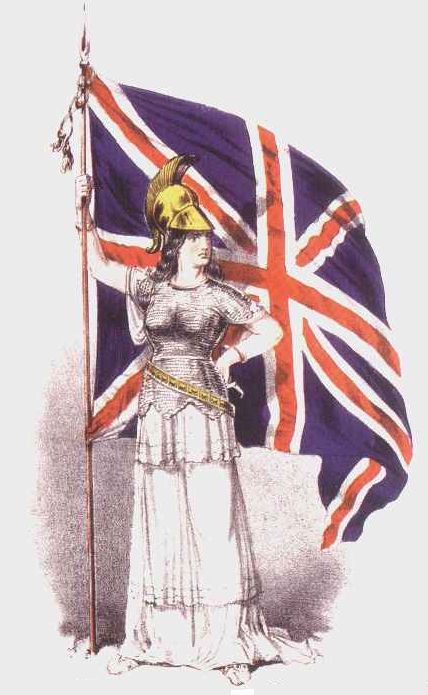
Rising of a Perfect Storm between the two Goliaths in this conflict - The Episcopal Church and the Church of England, between the rise of an Episcopal Communion and the fall of the Anglican Communion.
The Perfect StormThe
Global South is now watching very carefully as the two
colonial superpowers, both founding members of the Anglican Communion, clash. What we have is the presupposition that the British (including the Welsh-born Archbishop of Canterbury) disapproves of the unilateral and self-centered decisions of
Americans - in this case the Americans in The Episcopal Church. And on the other hand, we have the presupposition of Americans that
Foreigners (including the Archbishop of Canterbury and his primates - or as the
Bishop of Virginia called them,
foreign prelates) have no business meddling into the internal affairs of Americans - and in this case, with The Episcopal Church.

These cultural prejudices are deeply held and deeply felt and they were played out on center stage at Lambeth. I watched it every day - that the real
dueling press conferences were not just between the two dividing wings of The Episcopal Church, but more importantly between the Archbishop of Canterbury and The Episcopal Church. It is no wonder then that when Rowan Williams made his strongest remarks about compliance to the moratorium in his final
Presidential Address at Lambeth, that it was the American Presiding Bishop who stood there with her arms folded in defiance.
"The Christian with the new insight can’t claim straight away that this is now what the Church of God believes or intends; and it quite rightly takes a long time before any novelty can begin to find a way into the public liturgy, even if it has been widely agreed. Confusion arises when what is claimed as a new discernment presents itself as carrying the Church’s authority."
Rowan Williams, Archbishop of Canterbury
Third Presidential Address, Lambeth 2008
In addition to the major theological divide between The Episcopal Church and the rest of the Anglican Communion on the legitimacy of the prophetic witness of full inclusion, we see the inflaming of significant differences in an even deeper division that reaches back to the founding of our own country.
The fact remains that the Americans told the British what they could do with their King and took off.
That unilateral decision-making has been with us ever since. George Washington was the first to
warn us of our "foreign entanglements" and - despite their proliferation - we've always instinctively preferred isolationism as our natural inclination. And that seems to be over and over again a surprise to our overseas friends. We might go bomb Iraq, but we don't want to live there. The British did not follow the same game plan and often seem to project their own former empire-building onto America when America would much rather go home and mow the lawn.
Europeans - yes, now, even the British - have never fully grasped this fact as part of the American genetic code. We don't like foreigners - though ironically descendants of foreign immigrants ourselves, our suspicion of foreign intervention into our own affairs is deeply embedded. If you immigrate here, we embrace the bits of you we like and absorb the rest. We have Irish/Mexican restaurants that sell hamburgers. As a famous sign in Maine once said, "Welcome to Maine, now go home." We might welcome your tired, your weary, your huddled masses, but not if they still have one foot in foreign soil.

The Episcopal Church boldly exploited this prejudice (and added some extra ones as well) in their campaign to discredit the intervention of the Global South primates and provinces in the current Episcopal Church crisis. The Episcopal Church is keen to point out that they are "foreign prelates" and if that' s not enough, we are reminded that they are "
Nigerian foreign prelates." Don't think they would have added that extra details if the "foreign prelate" came from Norway.
Of course, it didn't work because the ties that bind us are not cultural, but spiritual and those spiritual ties are bound by our common love for Jesus, breaking down the dividing walls of cultural and national prejudice.
Across the pond, resentment to American self-centered unilateralism (except when they were in a tough jam) is written into the European (and British) cultural DNA as well.
It seems clear that there is an initiative within the Church of England (both orthodox and progressive) to subtly exploit the American problem to their own advantage in defending their rather colonial view of the Communion. Both the American progressives and the American orthodox are working outside of the British institutional forms (the progressives through the "prophetic witness" and the orthodox through their "realignment") and both raise the ire of the British progressive and orthodox institutionalists who seek to preserve the former colonial order.
The Archbishop of Canterbury took a very interesting step at the end of Lambeth. He declared that The Church is the
Anglican Communion. The Church is made up of Provinces. For example, the Anglican Covenant will be ratified by the Provinces, not by the Dioceses.

This is a shrewd move. The Episcopal Church leadership rejects that supposition (we heard them argue that point in court) that the Anglican Communion is a Church. Historically, at least in Virginia that is, the view was that the Church was actually the Diocese, not the Province. The Diocese was made up of parishes and missions. We found our identity as Anglicans through our bishop who was in direct communion with the Archbishop of Canterbury.
This view was smashed in the current Episcopal litigation when the Presiding Bishop intervened for the first time as a Primate and ordered the Diocesan bishops to comply or face lawsuits. The Province was now asserted as the Church, not the Diocese and certainly not the Communion. The diocesan bishops capitulated and those that resisted faced the Episcopal equivalent of deportation and ecclesiastical capital punishment.
With these actions, The Episcopal Church began to assert that not only was it The Church, it was The Communion as well.
But instead of the Archbishop of Canterbury recognizing that the bishops are the head of their churches, he recognizes that the Communion is the Church of which he is the spiritual leader. That Church is composed of Provinces with
Primates as their spiritual leaders.
This does not sit well with The Episcopal Church which - until Katharine Jefferts Schori started to sign her name on her correspondence as such - does not have a Primate but a General Convention that only speaks once every three years. That it lacks a single spiritual leader was done on purpose at its institution, still fresh from the scars of the American Revolution. It is a denomination with bishops, clergy, and laity - all sharing leadership. Neither the Presiding Bishop or the Executive Council can speak for The Episcopal Church (as much as they keep trying to).

Sadly, the General Convention has exploded into a bureaucratic quagmire, with every single diocese (no matter how tiny or how large) electing
eight deputies as well as additional alternates to General Convention. If that's not enough, every diocese sends all of its bishops - as well as all the retired bishops - to sit for three weeks in a separate house on top of that. Add to this all the General Convention personnel, and the entire 815 apparatus, and all the diocesan staffs and all the activist interest groups and all the hangers-on as well and it's a catastrophic nightmare. After watching the much smaller, much less chaotic and - even when things get rather heated - rather polite General Synods of the Church of England or the provinces in Australia, or even the Church of Canada it magnified the fact that The Episcopal Church's General Convention is neither efficient nor democratic.
Let's not forget the orthodox and moderates of The Episcopal Church who also oppose this view of elevated provincial status. Their view is that each bishop is in
direct communion with the Archbishop of Canterbury, not through 815 (the headquarters of the Presiding Bishop). From the orthodox view, the churches are at the diocesan level and they have direct connection to Rowan Williams. The Lambeth Conference becomes important for their own identity as Anglicans - their invitation to Lambeth denotes their full membership in the Anglican Communion. But that is, of course, only once every ten years.
The view that bishops have direct access to the Archbishop of Canterbury then opened the door for the interventions from overseas primates into the crisis at the diocesan level in The Episcopal Church. By realigning parishes and congregations and their clergy with Anglican bishops from other provinces, theologically disenfranchised laity and clergy could separate from their bishop of origin and yet still remain Anglican. This has continued now to the diocese itself.
With the Archbishop of Canterbury now moving to relate directly to provinces (and their primates) rather than to individual bishops, these interventions (called incursions by opponents) remain in play because Rowan Williams is now moving to negotiate with the provincial leadership directly. This causes friction with the orthodox diocesan bishops in The Episcopal Church who's only direct voice becomes the Presiding Bishop of The Episcopal Church, hardly someone who will communicate their own voice. Where do they now turn?
This dilemma easily provides an opportunity for adversaries to promote friction between the orthodox that have separated and the orthodox that remain. The orthodox that have separated indeed have a direct line to Canterbury (much to the Presiding Bishop's consternation) through the primates offering them sanctuary. The orthodox still in TEC are aliens in their own lands. Do they turn on the Presiding Bishop (who will then slap them with a lawsuit) or on their own allies instead? It's a conflict - and one that is often sadly fanned - either inadvertently or on purpose - from friends abroad.

It's a brilliant strategy - that even as Rowan Williams may be negotiating with the Global South primates who are leading these interventions - back home the orthodox are facing their own internal divisions between those who are on the "outside" and those who are on the "inside" with the "outside" actually having more direct access then those on the "inside." That's not exactly fair.
So what to do? What can be done? In June we saw a a new direct highway, a beltway around the colonial structures, that gives all the orthodox - inside and outside - a voice. And the Archbishop of Canterbury is listening, hardly good news to The Episcopal Church.
Enter GAFCON.
I saw evidence over and over again of the fires of dissent being stoked to divide the "inside" from the "outside" at Lambeth, stoking the fires of a Perfect Storm. And yet this is why the
Global Anglican Future Conference and the
Jerusalem Statement it produced is such a threat to the colonial structures of the Anglican Communion.

GAFCON brings together on one highway, in one network, both the "inside" and "outside" orthodox Anglicans - conservative and moderate - and it comes with the force of seven primates. If Rowan counts on York and on the progressive primates in Europe and New Zealand and Australia he might - might - equal GAFCON's coalition. But even if The Episcopal Church takes their "primate" out of play (one way or the other) or if she stays, Rowan Williams is still left to woo the Global South primates who did not attend GAFCON. Together they enjoyed a bilateral charm offensive.
And that is what Rowan Williams spent an enormous amount of time doing at Lambeth - courting the Global South primates who did not attend GAFCON, but in the end with mixed success.
It is clear Rowan Williams heard them - his final presidential address and his final press conference illustrate that. However, since he could not necessarily woo them theologically - as the
Deborah Pitt Letters reminded us (and somehow strategically reminded us again days after Lambeth eneded) - he has to use another method of courting and that brings us back to the rising of the Perfect Storm.
Most of the Global South members are also members of the
British Commonwealth and therefore carry the same cultural inclinations as their Mother Church. We heard from one prominent Global South primate who
drew a parallel between the unilateral decisions of The Episcopal Church on human sexuality and America's invasion of Iraq. We know that Rowan Williams opposes the war in Iraq. This opposition probably includes the same resistance to American independence and this would be a natural point of common contention with some of the Global South primates who may be sympathetic with GAFCON's objectives but did not actually attend the gathering in Jerusalem.
This view would find perhaps a fertile ground to build allies not only with the orthodox institutionalists in the Global South, but also - interestingly enough - with some of the
evangelicals in the Church of England:
The problem with the Americans - all of them - is that, well, we are American.
In this Perfect Storm rising now - between the Americans and the British, between The Episcopal Church and the Church of England, and between the Common Cause Partners and the orthodox still working on the inside in TEC and the COE - we suddenly see a surprise.
The storm intensifies because of a surprising common thread between the two major opponents in the crisis in The Episcopal Church - the progressive leadership of The Episcopal Church and the leadership of the churches that have all ready separated from TEC.
What these two opponents have in common is that both are motivated by a type of faith and not by alligiance to aging colonial ties. The opponents faith are
diametrically opposed to one another - make no mistake about that - which is why we are in division, deep division. But we share a common belief in the supposition that our faith is above colonial ties. We are descendants of revolutionaries. Ideas bring action. Though our divisions are irreconcilable - it is clear that even the Archbishop of Canterbury concedes this point, we are both fueled by ideas, by a dream.

Rowan Williams is appealing to old colonial ties to incline compliance in the moratorium and that those ties will be more powerful than faith. That is where he rests his case.
For those of us who find that our faith is where our identity resides - and not our colonial ties - this appeal will find NO TRACTION. So the Pitt Letters reveal what both sides in The Episcopal Church division know - the Archbishop of Canterbury puts his colonial ties above his faith (unless he has changed his mind,
which is indeed possible and important to note). But if, in fact, it appears his faith is defined by those colonial ties, then the Church of England is not bound together by a common faith, but through those old established ties. It is indeed an Established Church, with its Anglican Communion as the iconic symbol of its
colonial conquests. In fact, the Communion is the last symbol of their colonial empire.
And so the questions are before us: Will The Episcopal Church bow to the old colonial ties to the Church of England and sacrifice its deeply held faith in what they believe is the prophetic witness of full inclusion? Will the orthodox and moderate bishops give their assent to the strengthening of ties between the Archbishop of Canterbury and the Primates, between the Anglican Communion and its provinces, rather than upholding the Apostolic Succession in Communion with Canterbury as its guide? What are the ties that bind us together - the historic structures or the historic faith?
Remember, centering the Communion on the historic Apostolic Succession of the Episcopate (which has been the case) is not in the interest of the Archbishop of Canterbury when he finds there are individual bishops who are canoncially consecrated by their primates, but severely challenge the colonial structures of the Church. He's spent five years trying to sort that one out and failed.
It seems clear that the historic episcopate of all the bishops (and the over-abundance of American ones) can no longer be the tie that binds us all together. This has caused many to flee to Rome.
With so much of the growth that exists in the Church of England coming from the evangelical congregations that do not necessarily uphold a passionate view of
Apostolic Succession as their symbol of unity, the act of downplaying that primary connection for diocesan bishops is not a significant loss - especially in England. They have direct access anyway. After all, Rowan Williams is both a diocesan bishop and a primate, something the American Church does not have. He attends both Lambeth and General Synod. But most evangelicals only read about him in the newspaper.

Replacing the old diocesan ties to Canterbury with a primatial one that emphasizes the old colonial structures will be hardly noticed by the British evangelical laity in the pews (or is it the folding chairs?) since the Church of England continues to enjoy a privileged status of establishment. The evangelicals don't just pop over to the next church on the block when things go awry as we do in America. The orthodox (and progressives for that matter as perhaps the American activists found out) in the Church of England are not
republicans in the classic sense - they are the established state church and that tie has yet to be challenged unless and until Parliament takes enough contrary political action that severely compromises the moral foundations of the Church of England itself (which, frankly, is underway) - and the orthodox find they cannot stop the tide of moral corruption from washing over their own local parish.
Right now many believe they still can hold back the tide (and they are trying very hard, I might add) and Rowan Williams knows that as long as the orthodox want to preserve the colonial structures of the Church of England and the Anglican Communion, they will support him. If subtle anti-American sentiment can be politely inflamed, then brick by brick a wall of separation can be built between the "radical" GAFCON network and the "loyalist" orthodox components inside the Church of England.
That being said, Rowan Williams was as clear as he has ever been that he did not view "full inclusion" (that is the promotion of the ordination and consecration of openly homosexual persons) as a human rights issue - in fact,
he flat out rejected that view. He appears that he now opposes taking direct action on any views he may have held as a theologian, indicating that the preservation of the Anglican Communion through its colonial structures is of greater importance to him than the rush for sexual innovations by the Americans. That Americans do not play by the rules and instead flaunt the rules irritates the British. Americans are helpful in unilaterally interfering with the Germans when they drop bombs on London, but otherwise they are a pain in the neck. Many of the British orthodox and progressive Anglicans can agree on that. This is not good news for The Episcopal Church.
Are the canons now pointed from 815 Second Avenue to Lambeth Palace and back again? Does it mean more to The Episcopal Church to capitulate their prophetic witness so to have "Anglican Communion" on the stationery? At the end of the day, are the progressives truly motivated and sustained by their faith in these innovations? How deep does that faith go?
Faith in full-inclusion, as far as I've been able to tell over the years, goes very deep into The Episcopal Church ethos. In fact, in a rather ironic fashion, I was nearly shocked to see Rowan Williams so casually dismiss it, not on the grounds of a sudden incursion of biblical faith, but rather to advocate a massive return to the closet. It is clear that such innovations are not deep in his own ethos, which perhaps The Episcopal Church did not expect.

There is one thing in all this that cannot - that must not - be overlooked, especially for the orthodox inside and outside The Episcopal Church and the Church of England - as well as with the millions in the Global South.
The affection for our colonial heritage with England is indeed a mystery. It is not superficial. To say we've somehow outgrown those ties is also blinking at reality. I watch
Merchant Ivory productions as much as anyone else. I can quote
Shakespeare - not just a couple of lines, but entire silloquies and sonnets, and throw in some
Milton and
Austin and
William Blake and
Charlotte Bronte just for good measure. My bookcases are filled with British literature and British films. I'm in love with
Alan Rickman. But at the end of the day, is that really what ties us together - a colonial affection for an empire long gone? An empire now
gone with the wind?
How deep the ties are between the people - the relationships the progressives have with one another in their promotion of full inclusion as a human right and the relationships the orthodox have with one another in their deeply shared mission for evangelism, how willing will we be to sacrifice those relationships for the non-guaranteed security of colonial ties? At the end of the day, do we want to say "I fought the good fight, I saved the church?" Or rather "I fought the good fight, I kept the faith?"
The Episcopal Church and the Church of England are now engaged in such a decision, in such a choice, in such a struggle, in such a Perfect Storm. Hold on to your hats and your brollies. The tide is rising.

 BB NOTE: You can read the opinions for yourself. StandFirm has Contracts Clause Opinion, the Waiver Opinion, and Judge Randy Bellows Order.