Friday, June 01, 2007


Who can hold the stars
And my weary heart?
Who can see everything?
I've fallen so hard
Sometimes I feel so far
But not beyond your reach

I could climb a mountain
Swim the ocean
Or do anything
But it's when you hold me
That I start unfolding
And all I can say is

Hallelujah, hallelujah
Whatever's in front of me
Help me to sing hallelujah
Hallelujah, hallelujah
Whatever's in front of me
I'll choose to sing hallelujah

The same sun that
Rises over castles
And welcomes the day
Spills over buildings
Into the streets
Where orphans play

And only you can see the good
In broken things
You took my heart of stone
And you made it home
And set this prisoner free

Hallelujah, hallelujah
Whatever's in front of me
Help me to sing hallelujah
Hallelujah, hallelujah
Whatever's in front of me
I'll choose to sing hallelujah

Bethany Dillon

Thursday, May 31, 2007

Not so fast ... Lord Carey challenges Kenneth Kearon's media statements

BB NOTE: Lord Carey, Archbishop of Canterbury prior to Rowan Williams, has written a letter to the Church of England Newspaper where he takes on Kenneth Kearon, Anglican Communion Secretary, regarding his recent statements justifying the current withholding of Lambeth Invites to the CANA and AMiA bishops. Oops.

Sir,

Kenneth Kearon suggests (CEN May 25) that the decision not to invite AMiA bishops, or the recently consecrated CANA Bishop, to the Lambeth Conference relates to a precedent I set in 2000…

…This, of course, was before 2003 when the Episcopal Church clearly signalled its abandonment of Communion norms, in spite of warnings from the Primates that the consecration of a practising homosexual bishop would ‘tear the fabric of the Communion’. It is not too much to say that everything has changed in the Anglican Communion as a result of the consecration of Gene Robinson.

The Archbishop of Canterbury’s prerogative to invite bishops to the Conference is a lonely, personal and important task. Before each Conference a number of careful decisions have to be taken, with the focus being on the well-being of the Communion. The circumstances facing each Archbishop of Canterbury will vary according to the needs of the hour.

For these reasons, I believe, that Dr Rowan Williams should not regard the advice he has evidently received that this matter is ‘fixed’ as necessarily binding on him in the very different circumstances of 2007.

Tip of the Tinfoil Hat to Thinking Anglicans.

LATER: The full text of Lord Carey is here at Anglican Mainstream.


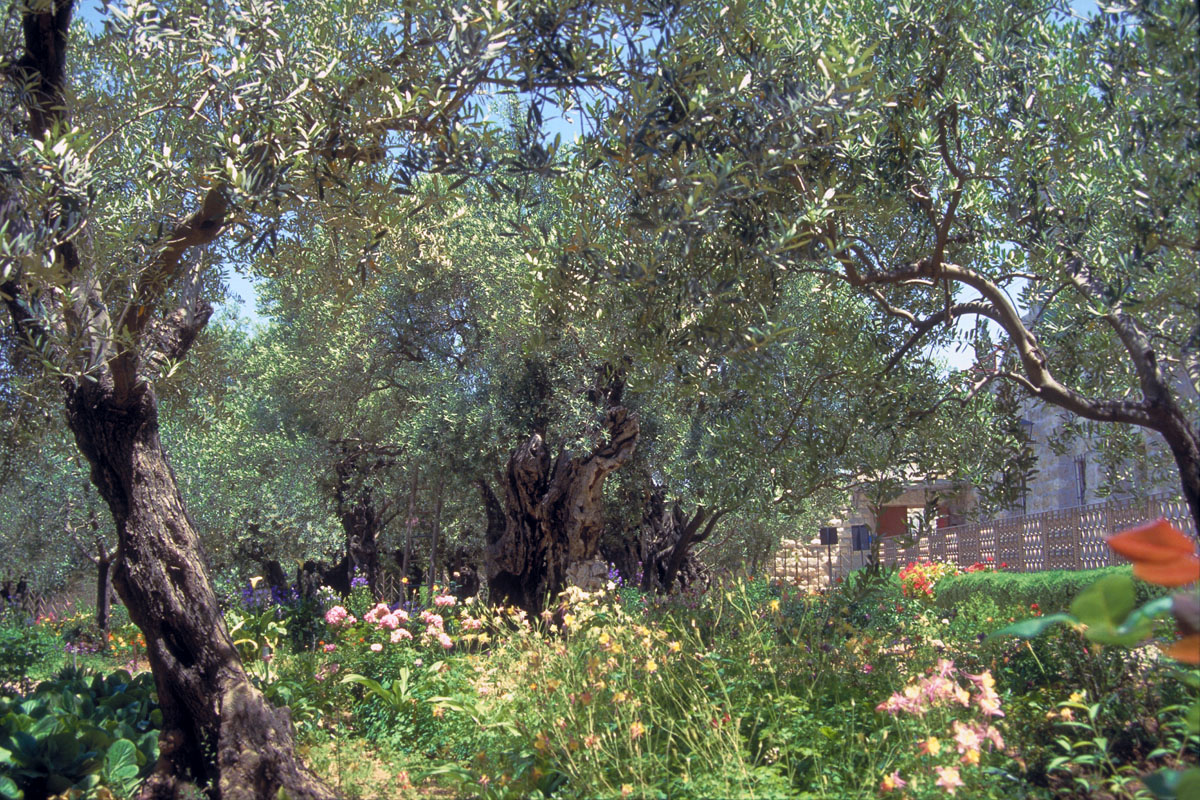
NOTE: We'll break out the Romulan Ale if someone in the cafe can name the picture and its significance. We were having an ironic moment when we posted "Jerusalem," words by William Blake.

Anglican Summit: Common Cause Council of Bishops will meet in Pittsburgh (Sept. 25-28)

Common Cause Council of Bishops Set for Sept. 25 – 28

Bishops from the Anglican Communion Network, the Anglican Mission in the Americas (including the Anglican Coalition in Canada), the Convocation of Anglicans in North America, the Anglican Network in Canada, the Anglican Province of America, Forward in Faith North America and the Reformed Episcopal Church are invited to attend the first-ever Common Cause Council of Bishops in Pittsburgh, PA, September 25–28. Two of the Common Cause Partners, the American Anglican Council and Anglican Essentials Canada, are not ecclesial jurisdictions and do not have bishops. Several other Anglican jurisdictions are currently in the membership process.

Since its formation in 2004, Anglican bodies connected to each other through Common Cause have committed to working together for “a Biblical, missionary and united Anglicanism in North America.” Together, they have crafted a common theological statement and articles of federation. Both are being considered and adopted by each Common Cause Partner.

“By the time we meet, the House of Bishops of the Episcopal Church will have given its response to the Anglican Communion as to its decision to ‘walk apart.’ By contrast, I expect our gathering to signal a new level of ‘walking together’ both with each other and with the wider Anglican world,” wrote Anglican Communion Network Moderator and Common Cause convener Bishop Robert Duncan. The meeting, said Bishop Duncan, is the result of many years of work toward Anglican unity, work responding to resolutions of both the Lambeth Conference of Bishops and The Episcopal Church’s General Convention.

Bishop Duncan went on to describe the purpose of the gathering as fivefold.

1) to take the Common Cause Partnership to the next level of development in mission together;

2) to showcase ministry initiatives of any of the partners that might be shared with all the partners (e.g., The Anglican Relief and Development Fund);

3) to share understandings of the purpose and role of bishops such that some common guidelines for the making of bishops relative to numbers of communicants and congregations might be developed;

4) to consider whether a permanent Common Cause College of Bishops might be created, in order that ever greater levels of communication, cooperation and collaboration can be built; and

5) to initiate discussion of the creation of an “Anglican Union” among the partners, moving forward the vision of the Primates of the Global South for a new “ecclesiastical structure of the Anglican Communion in the USA.”

“The Council of Bishops lacks the voice of the laity. It is not a full synod of the Common Cause Partners, but it is the next step agreed upon by the Common Cause Roundtable. While it is not the end of our journey, it does continue the trajectory of ever greater unity and ever closer cooperation between those of us who know Jesus as the only Lord. In the challenging weeks and months ahead, let us say our prayers, do the work before us and trust ‘that things which were cast down are being raised up, and things which had grown old are being made new,’” said Bishop Duncan.

Wednesday, May 30, 2007

Snapshot

From FoxNews and
Newsbusters today: A sampling from the interview (40th Anniversary Edition of Rolling Stone):


"Do you think it's gloomy on the horizon?" Rolling Stone Editor Jann Wenner asks Bob Dylan.

"In what sense do you mean?" says Dylan.

"Bob, come on," says Wenner.

"No, you come on. In what sense do you mean that?" Dylan says.

Wenner tries again: "We seem to be hell-bent on destruction. Do you worry about global warming?"

"Where's the global warming?" Dylan asks. "It's freezing here."

2007

Read the whole thing here. Tip of the TinFoil Hat to RWB.

Tuesday, May 29, 2007

Breaking News: Six Congregations Join CANA

CANA Welcomes New Congregations

(Fairfax, Virginia) Congregations in Connecticut, Florida, and Colorado have joined the Convocation of Anglicans in North America (CANA) during the past several days. CANA now has 37 registered churches in 15 states plus the District of Columbia, plus several non-parochial priests ministering in Iraq, Israel, and the United States. The three new congregations are:

Trinity Church, Bristol, Connecticut
A pre-Revolutionary War parish that was established in 1747, Trinity Church built its first church building on Federal Hill Green in then New Cambridge in 1754. Trinity Church is one of the “Connecticut Six”, a group of Anglican congregations within the state of Connecticut who have sought to maintain their historic connections with the wider Anglican Communion despite continuing legal challenges initiated by the Episcopal Diocese of Connecticut. Today, Trinity Church is an active worshipping community of approximately 130 under the leadership of the Rev’d Donald Helmandollar.

Christ the King Anglican Church, St Augustine, Florida
A new congregation in America’s oldest city, Christ the King was formed initially by members of St. Cyprian Episcopal Church. They separated from he Episcopal Diocese of Florida after a forty-day period of discernment. They have a strong mission focus and an active ministry with young people. Today they are an ethnically diverse community of approximately 100 under the leadership of the Rev’d David Allert.

Grace Church and St Stephen’s, Colorado Springs, Colorado
A historic church founded in 187,2 and the “mother church” of several congregations in Colorado Springs, Grace Church was one of the first Episcopal churches established in Colorado. In recent years they have found themselves unable to follow the direction taken by the current leadership of The Episcopal Church and have just completed a discernment process that culminated in a congregational vote this past Saturday. The congregation voted with a 93% majority to separate from the Episcopal Diocese of Colorado and join CANA. They are an active worshiping community of approximately 550 under the leadership of the Rev’d Donald Armstrong.

Three other churches that have recently joined CANA include the following:

St Brendan’s, Washington, D.C.
St Brendan’s in the City is an emerging congregation in urban Washington, D.C. This congregation is particularly focused on social justice issues and inner-city ministry with marginalized people, as well as the contemplative life. St Brendan’s is led by the Rev’d Bill Haley who formerly served at The Falls Church (Falls Church, Virg.) as the founding pastor of Kairos and director of outreach.

Holy Trinity Anglican Church, Garland, Texas
This parish is a new congregation formed initially by members of Holy Trinity Episcopal in Garland. After spending more than a year wrestling with issues prompted by the crisis in The Episcopal Church, this congregation made their decision to separate from the Episcopal Diocese of Dallas and join CANA, walking away from their property and purchasing land for a new church plant. Today they are an active worshipping community of approximately 250 under the leadership of the Rev’d Lawrence Harrison.

Celebration Church, Fredericksburg, Virginia
Established as a new CANA congregation, Celebration Church has a vision to reach people in the greater Fredericksburg area. They are committed to building a community of faith that is both rooted in historic Anglican teaching but also engaged with the challenges of contemporary living. They are already an active worshipping community of approximately 60 under the leadership of the Rev’d Toby Larson.

“I am very pleased that CANA is providing a safe haven for faithful Anglicans in the U.S. who feel cut off from the worldwide Anglican Communion,” said the Rt. Rev’d Martyn Minns, Bishop of CANA. “I am also delighted that we are reaching out and planting new congregations. It is especially appropriate that new people are coming to faith and new churches are being established as we celebrate the beginning of the Christian movement on the Feast of Pentecost.”

TLC: Trinity Episcopal School for Ministry (TESM) Names former Dean John Rodgers as Interim

The Living Church reporting:

The Rt. Rev. John H. Rodgers, Jr., has been appointed interim dean at Trinity Episcopal School for Ministry. He will serve for one year beginning Aug. 1 while Trinity searches for a permanent successor for the Very Rev. Paul F.M. Zahl, who announced May 10 that he would resign effective at the end of July.

Bishop Rodgers is dean and president emeritus, having served as dean of Trinity from 1978 to 1990. He is also a trustee emeritus at Trinity and a former member of the faculty at Virginia Theological Seminary.

In 2000, Bishop Rodgers and the Rt. Rev. Charles H. Murphy III were consecrated bishops for the Anglican Mission in America (AMiA), part of the Anglican Church of Rwanda. Bishop Rodgers previously retired from active service with the AMiA.

“The board voted without hesitation to appoint Dr. Rodgers to this post,” said the Rev. Canon David H. Roseberry, chairman of the board of trustees at Trinity. “He is the perfect person to help guide our school through this transition, and he has the full support of the board and the faculty.”

Fr. Roseberry noted that Trinity has been accepting students who do not plan to pursue ordination in The Episcopal Church for more than 10 years, and the appointment of Bishop Rodgers is reflective of the multi-denominational character of the seminary alumni.

Walkin' in the Mystic Garden

BB NOTE: We've been hearing about the 1980 Gospel Dylan concerts for quite a while (but since much of the Dylan commentators would rather just forget those years, it's not been easy to either get an objective view on those concerts or to understand how his writing in those years fit into his entire lexicon. There are more articles and books now being written on the topic, but it isn't easy! Thanks to YouTube (and the amazing renkflv) we are able to see the concerts for ourselves (though they are still rare). One of the aspects of those Gospel concerts is that Dylan would talk to the audience about issues of faith. We've been suspecting that he was in the same sort of "revival" as we knew in California (1974-1975) or that Bono has talked about during those same years and this video shows that to be the case. With the events of today, it is sort of interesting to see it again. Not a bad idea to keep any eye on things up North, anyway. We must remember where the weapons are still pointed, even now. But let's not put on the tinfoil hats over that, quite yet.

Still, as we were watching this video (see below), we remembered a song off of Dylan's latest album. He often ends with a powerful "closing" track, and this one is the closing track of Modern Times. The lyrics are now up at BobDylan.com and we include those as well. It's rather fascinating to juxtaposed this 1980's conversation with the audience from the stage in Toronto (what is it about Toronto, anyway?) and the closing song (hymn?) of Modern Times.


LATER: Zowie! Check this Reflection out at A Word on the Word- well, what do you think, Friends? In the old days, Dylan just said it. But who listened? Not many (Bono, maybe, and a host of Vineyard worship leaders). Looks like he's still writing the stuff - only now its integrated into his art. From Preaching to Poetry.


As I walked out tonight in the mystic garden
The wounded flowers were dangling from the vines
I was passing by yon cool and crystal fountain
Someone hit me from behind

Ain't talkin', just walkin'
Through this weary world of woe
Heart burnin', still yearnin'
No one on earth would ever know

They say prayer has the power to help
So pray from the mother
In the human heart an evil spirit can dwell
I'm trying to love my neighbor and do good unto others
But oh, mother, things ain't going well

Ain't talkin', just walkin'
I'll burn that bridge before you can cross
Heart burnin', still yearnin'
They'll be no mercy for you once you've lost

Now I'm all worn down by weepin'
My eyes are filled with tears, my lips are dry
If I catch my opponents ever sleepin'
I'll just slaughter them where they lie

Ain't talkin', just walkin'
Through the world mysterious and vague
Heart burnin', still yearnin'
Walking through the cities of the plague

The whole world is filled with speculation
The whole wide world which people say is round
They will tear your mind away from contemplation
They will jump on your misfortune when you're down

Ain't talkin', just walkin'
Eatin' hog eyed grease in hog eyed town
Heart burnin' – still yearnin'
Someday you'll be glad to have me around

They will crush you with wealth and power
Every waking moment you could crack
I'll make the most of one last extra hour
I'll avenge my father's death then I'll step back

Ain't talkin', just walkin'
Hand me down my walkin' cane
Heart burnin', still yearnin'
Got to get you out of my miserable brain

All my loyal and much loved companions
They approve of me and share my code
I practice a faith that's been long abandoned
Ain't no altars on this long and lonesome road

Ain't talkin', just walkin'
My mule is sick, my horse is blind
Heart burnin', still yearnin'
Thinkin' ‘bout that gal I left behind

It's bright in the heavens and the wheels are flying
Fame and honor never seem to fade
The fire's gone out but the light is never dying
Who says I can't get heavenly aid?

Ain't talkin', just walkin'
Carrying a dead man's shield
Heart burnin', still yearnin'
Walkin' with a toothache in my heel

The suffering is unending
Every nook and cranny has it's tears
I'm not playing, I'm not pretending
I'm not nursing any superfluous fears

Ain't talkin', just walkin'
Walkin' ever since the other night
Heart burnin', still yearnin'
Walkin' ‘til I'm clean out of sight

As I walked out in the mystic garden
On a hot summer day, hot summer lawn
Excuse me, ma'am I beg your pardon
There's no one here, the gardener is gone

Ain't talkin', just walkin'
Up the road around the bend
Heart burnin', still yearnin'
In the last outback, at the world's end

B. Dylan 2006


Or - as the Prayer Book says, Christ has died, Christ is risen, Christ will come again.

AFTER-THOUGHT: Here's a very good article, written in 2003 from Cross Rhythms (UK), that explores more recent albums and songs of Dylan, focusing on biblical themes, as well as commentary on "celebrity conversions" and what Dylan has been writing about through the 1990s ending with Time Out of Mind (a phrase we found used in The Lion, the Witch, and the Wardrobe, interestingly enough). It makes for very good reading.

Monday, May 28, 2007

Memorial Day: Remembering Granddaddy


John William Ailes III

The Navy Cross is presented to John W. Ailes, Commander, U.S. Navy, for extraordinary heroism in the line of his profession as Commanding officer of the U.S.S. Cassin Young in action off Okinawa, Ryukyu Islands, on 12 April 1945. His conduct throughout was in keeping with the highest traditions of the Navy of the United States.

The Navy Cross is the second highest medal that can be awarded by the Department of the Navy and the second highest award given for valor. It is normally only awarded to members of the United States Navy, Marine Corps and Coast Guard but could be awarded to all branches of United States military. It was established by Act of Congress (Pub.L. 65-253) and approved on February 4, 1919. The Navy Cross is equivalent to the Distinguished Service Cross (Army) and the Air Force Cross.

April 1, 1945, was D-day at Okinawa. After escorting assault craft to the beaches and providing shore bombardment, Cassin Young took up the duties of radar picket ship, possibly the most hazardous duty performed by any warship during World War II. The picket's role was to provide early warning of impending air attacks to the main fleet. The ships assigned to the fifteen picket stations bore the brunt of over fifteen hundred kamikaze attacks in the weeks and months ahead. Radar Picket (RP) Stations 1,2, and 3 faced the worst of these attacks. On April 6 the Japanese launched the first of ten massed attacks, sending 355 kamikazes and 341 bombers towards Okinawa. Cassin Young was on duty at RP Station 3. The ship downed three "bogeys" (enemy planes) and picked up survivors from the destroyers assigned to RP Stations 1 and 2 (both were hit and sunk by kamikazes).

Cassin Young was then assigned to RP Station 1 where, on April 12, the ship came under massive attack. Six kamikazes were shot down, but one hit the mast and exploded fifty feet above the ship. One sailor was killed and 59 were wounded.

RADM John W. Ailes, III (1907-1974) was the commanding officer of the USS Cassin Young in April, 1945. He was a member of the crew of the USS Honolulu in Pearl Habor on December 7, 1941. In addition, he was the commanding officer of the Battleship, the USS Iowa (1955-1956) during the Korean War, was Commander Cruiser-Destroyer Flotilla 6 during the Cuban Missle Crisis (1962) and was Inspector General of the United States Navy.

But to me he was Granddaddy, always ready with a bottle of "Cherry Smash" and to take me fishing.


LATER: You can visit the USS Cassin Young. It is open to the public and moored next to the USS Constitution in Charlestown Harbor in Boston, MA. Read more about it at the webpage of the Boston National Historic Park. The tour includes Granddaddy's Cabin - restored to it's World War II period.

Sunday, May 27, 2007

Sunday Afternoon Reflection: Rock of Ages


Bob Dylan in Atlantic City, 1999.

Rock of Ages, cleft for me,
Let me hide myself in Thee;
Let the water and the blood,
From Thy wounded side which flowed,
Rock of Ages, cleft for me,
Let me hide myself in Thee.

While I draw this fleeting breath,
When my eyelids close in death,
When I soar to worlds unknown,
Behold Thee on Thy judgement throne,
Rock of Ages, cleft for me,
Let me hide myself in Thee.

1763


Thanks, RWB. You are the best. Click link for more info!

Anglican TV: News Update


Kevin and Bill discuss: the AD, The Invitations, and a whole lot more!

BB NOTE: Great overview of the last two weeks of Anglican/Episcopal news (thanks, guys, for the kind words!). We would like to add another thought regarding the Lambeth Invites: We are thinking that in these months and days leading up to September that that it may be very helpful to remember that there are "four instruments of unity" in the Anglican Communion: Lambeth, the ACC (which is coordinated by the Anglican Communion Office), the Primates, and the Archbishop of Canterbury. Of the four instruments, the ACC is the closest to The Episcopal Church. Kenneth Kearon oversees that "instrument" out of the Anglican Communion Office. And it was Kenneth Kearon who spoke at the media event last week, opening up the Archbishop of Canterbury's mail and reading it to the world.

Does he speak for the entire Anglican Communion now? No. Does he speak for the Archbishop of Canterbury now? Possible (the old British Diplomatic Tactic of running the proverbial flag up the flagpole and see which way the wind is blowing - don't need a weatherman for that, right Bob?).
Did he just wake up on Tuesday morning and think, "Zowie! I've got a great idea!" (we think not).

Or is he perhaps speaking to the world with his Manhattan friends in mind? Note that KJS is telling TEC to shhhush.

What we do seem to have is as much "political intrigue" as we could ever find here in DC. The Lambeth Invites Media Event was a political move, not a theological one. What it reminds us here of at the Cafe (so much so, we think we will set one of these up permanently at one of the tables by the window) is, well - see photo
- and pass the Chai.

Saturday, May 26, 2007

Report on the May 25th Meeting of the Clergy of the Diocese of VA with TEC Presiding Bishop, Katharine Jefferts Schori

BB NOTE: The following is an in-depth report on a meeting yesterday between the clergy of the Diocese of Virginia and the Presiding Bishop at Virginia Theological Seminary (VTS):

May 25 2007

Opening remarks by the PB:

PB: “One of the great gifts of serving in this position is that I get to travel around the church and see what’s going on. I get to meet people and hear stories about how the church lives its life in different places and contexts. And there’s enormous good news in that. Every diocese I have gone to visit has stories of health and vitality to tell. I discovered … last week that some people were annoyed by my talking about that. But I talk about that certainly because it’s true but also because it, I think it’s essential to counteract what the headlines have to say about the Episcopal Church, which is a tiny fraction of what is going on … the stories of health and vitality come from congregations and people and communities who are paying attention to the needs of their neighbors and are engaged in that mission to serve the world. I think that’s great and glorious good news and there simply needs to be more of it, and teach the other parts of the church or challenge other parts of the church to be about that work as well.”

“Now a conversation … just a word about “conversation” … it comes from a Latin word that means turn about, to go around with, to have dealings with, and it doesn’t come to mean what we mean as talking with each other til quite a bit later … “conversation” has that same constellation of meaning as the Hebrew word ‘yada , “to know” ... conversation is a way to begin to know each other in intimate ways, to hang out with other people, to come to know them. A conversation is one of the challenges, not just in this church but in our society. How do we have conversation that does not immediately lead to violence? You remember the flap about Don Imus and his comments about the Rutgers women’s basketball team? Well that was a violent conversation in many ways, and his language about the basketball players, ah their response was nonviolent. They said we just want to get together and talk, we want to have conversation with you … his words initially were words of judgment that these women were somehow less than I should pay attention to or not important to my life, they’re beneath me. And some of the commentators that challenged him and others were no different … Once we get to that point of conversation no one is going to come out of it in a gracious way. That leads to judgment through shutting off what we mean by conversation. I think as a church we have some capacity to model and teach a nonviolent way of having conversation. That’s something I think that’s a gift we have to offer not only in our own context but in that of the world around us. I long for conversations that build up … that create rather than destroy.”


Commentary: Many questions followed, and with them, many answers which often used the words ambiguity and conversation. With each new presentation in her slow and measured monotone, the Presiding Bishop made it clear she highly values continuing dialogues with others without necessarily valuing coming to a place of agreement. The final place that we can find in theology is ambiguity. While we may start by seeing things far more clearly, like a child learning to read by learning the alphabet she said, we learn as we grow that language is far more complex and ambiguous. I suppose she intended to say that those who were growing in their faith would also be leaving behind childish certainty for a more mature sense of ambiguity. Her comment later in the proceedings gave a very clear insight into her way of working through all these issues. She said, “I have no clear answers, that’s what pastoral skill is about.” What we received then, was not clarity, but we were invited into a relationship with someone who wanted to offer her pastoral skill to us an anxious and worried folk. When she added, “The spirit continues to urge us into greater depth.” What shall we find in those depths? The bishop told us that what was needed was not to have people change their minds but to have a change of heart. It was not hard to imagine that the change needed was that of becoming more open to the ambiguities of life, less anxious, more inclusive, and less tied to theological or structural answers. “We are still living into the theology of the ’79 Prayer Book,” she offered, “and the shift in ways of being is even harder than the shift in ways of thinking.”

This change of being needs to be reflected in how we are the church she said in many different ways, including offering an interesting perspective on planting churches and evangelizing folk. She told again her story of the priest who sits in a Starbucks waiting for people to talk to him about God. She applauded the idea of sitting and waiting for people to tell us their stories of God because after doing so “maybe we will have some good news to share with them.” We need to reach out “rather than by imposing our own well-defined structures on them we need to open up places to hear the stories of others.” However, as a church planter it seems odd that so little emphasis would be placed on proclamation of the good news … That lead another church planter to ask the Bishop about her sense of the mission of Jesus in salvation. Her answer was:


PB: Our understanding as Christians is that Jesus is our salvation, that he died for the whole world. That said, we don’t necessarily know the mechanisms by which God saves the whole world … My understanding of idolatry includes the assumption that I can know and comprehend the way in which God saves people who are not overtly Christian. I understand that Jesus is my savior, I understand that Jesus is the savior of the whole world. But I am unwilling to do more than speculate about how God saves those who don’t profess to be Christians. I look at the fruits of the life of someone like Mahatma Ghandi and the Dhali Lama and I see Christ-like features …

The priest followed up by suggesting the Bishop spent more time saying what she would not say instead of affirming what she could say about Jesus. She responded by describing the difference between what she called apophatic and cataphatic faith:

PB: “… our tradition includes both a negative way of refraining from affirming that God is more than we can understand, and is beyond our comprehension and there’s a positive part of our tradition that says Jesus is the way, the truth and the life. And I hear you saying that you want a much more positive statement about it and that’s not from where I come. I can only offer what I can offer.”

A follow up question by another priest asked the Bishop what she does with the Great Commission. The priest asking said she felt the Great Commission had been watered down.

Bishop Jefferts-Shori responded that it was to be lived out by “teaching and forming and baptizing and nurturing and continuing to prod people to grow up into the full stature of Christ.” Absent from this answer was any value of evangelism. There seemed almost a reticence or bashfulness about spreading the Gospel to those who have not yet heard it.

A question about Bishop Robinson failure to be invited to Lambeth brought a new twist on the ides of conversation:

PB: “The conversation isn’t over yet … how can we be involved in this conversation in a way that offers yet another possibility? … So rather than having to come to one conclusion or the other let’s keep it open and see if we can find something more creative …”

Another priest stated his dissatisfaction with the Anglican Covenant, and asked the Bishop what she felt it meant to be an Anglican. Her response included these words:

PB: “… One hundred and forty years ago we did, as a communion, make some statement about what we felt the essentials of Anglicanism were and are in the Chicago-Lambeth Quadrilateral. That’s been the basis of our conversations with other communities and other denominations for many years since. I think a big part of the push for something more clearly defined has to do with anxiety, with an unwillingness to live in the tension of two (contradictory) stories that can both be true … I think that the goal of increased conversation about identity and what it means to be an Anglican as well as an Episcopalian I think is enormously healthy …”

Another priest asked: “You started by talking about conversation and used the example of Don Imus and how speaking to people beneath you is not gracious. A question that comes out of my congregation is when they hear the words ‘a handful, a tiny minority a tiny fraction.’ There’s some question about how tiny it is and if it is growing in fact, and the comment I have to face is ‘Doesn’t that sound condescending to speak about these people as a tiny fraction?’ How would I respond to members of my congregation?”

Her response sounded familiar talking points:

PB: “I think it needs to be taken in its context … that the members of the congregations where a majority of members have voted to leave constitute about a half of one percent of the total congregations in the Episcopal Church. I do see that as a tiny minority …”

The priest did not seem satisfied with her answer and asked his question again. She responded:

PB: “Well I apologize if it sounds condescending. I am trying to report accurately what we understand is going on.”

The priest then commented: “So the ‘gracious conversation’ you said was the gift the church could offer … that conversation with the departing congregations would look like what?”

PB: “For those who have come now to the faithful conclusion that they can no longer be part of this body I think our task is to bless their journey and reassure people if they want to return the door’s open and we’ll keep the light on. We pray for the best for all communities …”

No one took the initiative to ask how praying for those communities and wishing them the best squared with the lawsuits pending against them. But then, the good Bishop may have only been trying out a new slogan for the Episcopal Church: “We’ll keep the light on for you.” After listening to her speak, though, it was clear that whatever light would be kept burning in the Episcopal church, it could not possibly be the light of Christ.

Commentary: What gets clearer is that in looking at faith you have to look at both the content of what is believed and the way in which someone believes. The content of her conversations is advanced, but the process of her faith is much less developed. This is what seems so confusing.

She appears to have a faith that encourages deep ambiguities and mysteries, when in fact that's the content of her faith, not her practice. That's what she says, not how she acts. No wonder so many of us feel marginalized by a person who says she is so concerned with people on the margins.

When she said, "I have no clear answers so it comes down to pastoral skill" I finally saw the light. The PB is all about pastoral skill. That's the highest value in her life, and no doubt why she has been lauded and raised to the highest levels in the church. She comes across as pastoral. Part of that skill comes through in her monotone and slow speech, the perfected skill of non-anxious presence. Part of her skill comes through in the content of her beliefs. But the how of her beliefs shows there is not space for others who hold contrary beliefs. Her value on conversation/relationship as the highest ideal points away from a the more highly developed faith that she seems to express in her words.

• What matters most is pastoral skill, and an outward impression of compassion. She will always act to protect this impression.

• When listening to the PB we need to look past the content and watch for the actions ... but then we knew that already.

• Those who applaud her are perhaps most interested in the calming presence she offers than in anything else she can teach

• To question her or stand against her ideas one has to do so without giving her any passion to work with, for she will very quickly discount any alternative answers as a "rush to judgment" or "people acting out of fear". It is simply not possible for the PB, given her process for thought/faith, to imagine that any smart/compassionate person could disagree with her conclusions. She may allow for them to do so, but she can't understand how it could happen.

The reporter is a member of the clergy of the Episcopal Diocese of Virginia.

Friday, May 25, 2007

Inside The Bus

"I don't think he travels with family. I think he has that bus all to himself. I think inside the bus, I think he has books, he has a typewriter, he has some sort of outlet to listen to music. I think he's constantly listening to new music, or old music. But who knows? What does he do all day? Does he work on the next volume of his book? Does he write new songs?"

Rolling Stone magazine's associate editor Austin Scaggs reflecting that the constantly touring Dylan is just as mysterious in his 60s as he was 40 years ago.


He seems to get e-mail somehow - he must have one souped-up typewriter. One thing we do know, he better check who's driving the bus.


Bob Dylan kicks off his 2007 US Tour June 22nd and 23rd in Atlantic City, NJ.

Thursday, May 24, 2007

Roundtable with Kendall Harmon, Matt Kennedy, and Geoff Chapman: The Lambeth Invites

Excellent StandFirm Roundtable with Matt Kennedy interviewing the Canon Kendall Harmon, Canon Theologian for the Diocese of South Carolina and the Rev. Geoff Chapman, rector of St. Stephen's Sewickly in the Diocese of Pittsburgh.

Happy 66th Birthday, Bob Dylan!


In honor of the Bard of the Cafe, we're celebrating! Pancakes are flying, cream pies are baking, pitchers of chai and butterbeer are flowing - it's all on the house today.

Thanks, Beatrice.


BB NOTE: We collect favorite Dylan performances at our All Along the Watchtower site. Enjoy!

UPDATE: The City of Duluth, MN has named a "cultural pathway" after Bob Dylan. Learn more at their special website on Bob Dylan Way. Bob Dylan was born in Duluth in 1941 and lived there until he was six, when his family moved to Hibling. Have added it to the list for the cross-country tour. Not sure exactly why this "path" was signficant for a six-year-old.

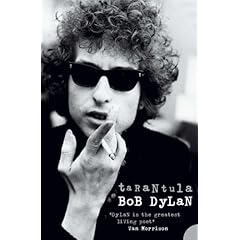
BUT WAIT, THERE'S MORE - Turns out that a British fan has figured out that Bob Dylan is not only a pioneer in music, the man who did the very first music video, the man who plugged in at Newport and started a revolution - he's also the Pioneer of Spam. Now we know why he wrote Tarantula. Fun reading here.